Technology
Labels for panels, control surfaces and devices
When control elements, notices or function designations must be clearly readable, a clean marking logic is central.
- Front panels
- Control surfaces
- Labels
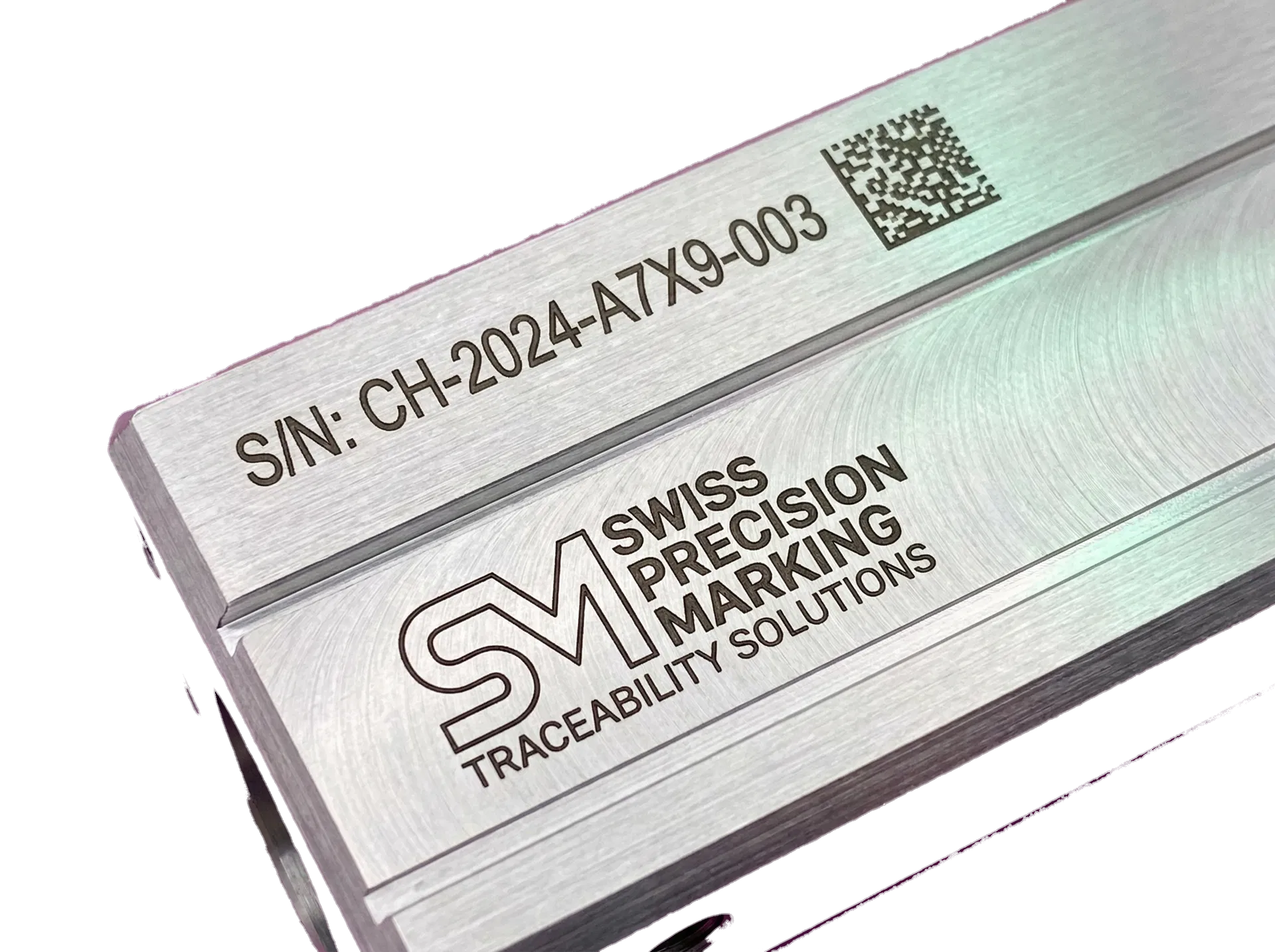
Laser marking addresses applications where technical information, labels and clear assignment are the focus. The distinction between decorative engraving and functional marking remains clearly recognisable.
Laser marking is useful when information must be clearly, permanently and reproducibly visible directly on the component. Typical applications are functional labels, data fields, scales, device designations and technical orientation elements.
Technology
When control elements, notices or function designations must be clearly readable, a clean marking logic is central.
Orientation
Laser-based labels help where information should be permanently, precisely and consistently visible on the workpiece.
Series capability
With recurring orders, you benefit from labels, shapes and surfaces being executed visually cleanly and reproducibly.
Coordination
The quality of functional markings increases when text content, sizes, material and application area are coordinated early.
Labels for buttons, switches, operating instructions and function fields when orientation should take place directly on the part.
Suitable for series designations, technical information and assignments that must remain permanently traceable.
Useful for applications where precise arrangement, good legibility and consistent repetition are decisive.
Material data
These figures come from the same database as our material check. Where something is not possible, it says so here and not only in the quote.
| Material | Cutting | Engraving | Marking | What this means in practice |
|---|---|---|---|---|
| Anodised aluminium | no | yes | yes | The anodised layer can be marked with high-contrast light marking — precise and permanent. Perfect for nameplates, control panels and serial numbers. Metal cutting is not possible with the CO2 laser. |
| Painted / coated metals | no | yes | yes | The laser precisely removes the paint or coating layer — the bare metal underneath forms the contrast. Also works on aluminium composite panels (Dibond). |
| Coated wood panels (Melamine, HPL) | conditional | conditional | conditional | Feasibility depends on the coating — for unknown compositions we check the material before processing. Melamine-coated panels can often be engraved well (contrast effect). Send us the material specification, we check suitability for free. |
| Stainless steel | no | no | conditional | With marking compound (e.g. Cermark) we produce permanent black markings on stainless steel. Cutting and deep engraving require a fibre laser — contact us. |
| Glass | no | yes | yes | Glass is finely frosted by the laser — elegant for glasses, bottles and awards. Cutting is physically not possible. |
| Mirror | no | yes | yes | Engraving is done on the reverse side through the coating — the effect appears in the mirror reflection. One of our specialties. |
| Acrylic GS (cast) | yes | yes | yes | The laser cutting classic: crystal-clear polished cut edges and brilliant deep engraving. Cast acrylic engraves milky-white — ideal for lettering. |
| Bare metals (Alu, Brass, Copper, Steel) | no | no | no | Bare metals reflect the CO2 wavelength and can neither be cut nor engraved. For metal engravings and cutting, we work with partners or advise you on fibre laser solutions. Alternative: Anodised aluminium or marking via Cermark. |
Laser marking modifies the surface without deep material removal. Laser engraving removes material and creates a tactile recess (0.1–0.5 mm).
Laminates (two-layer composites), coated acrylic, PE and PP. On laminates the top layer is removed revealing the lower colour — strong contrast.
Mechanically integrated into the material — permanent, solvent-resistant and UV-stable.
Yes. For scannable results CAESS Laser recommends light materials with strong laser contrast.
Yes. Particularly economical for recurring orders. Set up once, produce reproducibly.
Laser marking is more durable, solvent-resistant and requires no consumables.
AI, SVG, EPS or PDF. Fonts to paths.
Electrical engineering, mechanical engineering, medical technology and advertising.
Clarify marking
CAESS Laser checks with you how markings on the chosen material can be clearly, functionally and repeatably executed.
Related Pages