Laser cutting wood for displays, signage and finished surfaces with character.
Wood is particularly strong in the CO2 laser process when precise geometry meets warm material aesthetics. Wood, plywood or related materials are suitable for labelling, displays, décor elements and functional visual parts in the Swiss B2B environment.
Where wood is particularly meaningful as a credible material
Wood convinces when not only the grain but also the application purpose is visible. The focus is on applications where wood precisely supports brand impact, orientation or product staging.
Signage
For laser-engraved signs, brand surfaces and interior labels
Laser-processed wood is suitable for door signs, wall objects, brand surfaces or wayfinding systems when a warm yet precise effect is desired.
Signs
Logo surfaces
Interior communication
Displays
For product presentation, counter solutions and seasonal décor elements
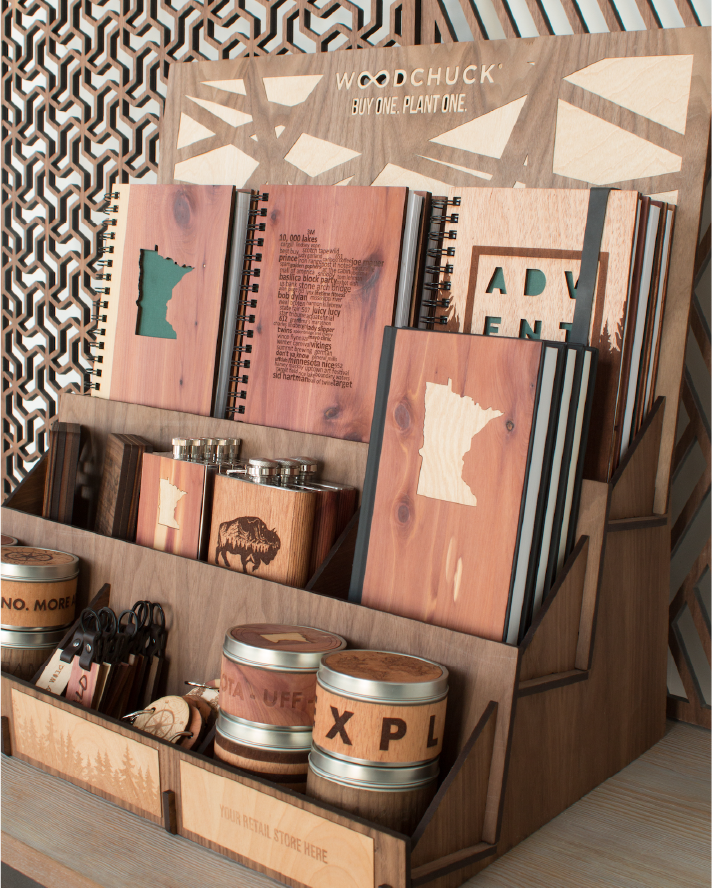
In retail and hospitality contexts, wood is frequently used as a display material because it frames products calmly while allowing individual shapes or levels.
Stands
Counter displays
Décor elements in the shop
Engraving
For finished surfaces and personal detail effect
Engravings on wood work particularly well when logos, lines, texts or ornamental details are cleanly incorporated and combined with the natural surface.
Logo engraving
Decorative lines
Personalised visual surfaces
Material logic
Wood type, surface and thickness noticeably affect the result
Depending on plywood, solid wood or coated material, engraving contrast, edge appearance and processability change. Good results therefore begin with the right selection of the base material.
Plywood and veneer
MDF/HDF depending on project
Test for effect and edge appearance
Typical wood applications in everyday projects
Signs and interior signage
For door signs, wall objects and orientation elements when warm material aesthetics should be combined with precise engraving or clear contours.
Displays and décor elements
Suitable for stands, counter solutions and seasonal staging when products should be calmly presented and individually designed.
Engraved visual surfaces
Useful for logos, texts and decorative lines on wood surfaces when material character and detail effect should carry together.
Technical specifications wood / MDF / plywood
Cutting thickness 1–12 mm (MDF, plywood, veneered panels). Engraving depth 0.05–3 mm adjustable – natural material variations affect engraving depth. Cut edge slightly charred; sandable or paintable if required. Minimum feature width from approx. 0.5 mm. Kerf width approx. 0.2–0.4 mm depending on thickness and wood type. Dimensional tolerance on the finished part: typically ±0.1 mm, ±0.2 mm for large formats and natural materials. The machine (Trotec Speedy 360, 120 W) positions to ±0.015 mm, work area 813 × 508 mm. Not recommended: high-glue-content pressed wood panels (increased smoke, reduced cut quality).
Material data
Cutting, engraving, marking: what works and what does not
These figures come from the same database as our material check. Where something is not possible, it says so here and not only in the quote.
Material
Cutting
Engraving
Marking
What this means in practice
MDF
yes
yes
yes
Cost-effective, dimensionally stable and precisely cuttable. The cut edge turns dark brown — a popular contrast effect. Heavy smoke is captured by our extraction system.
Plywood (birch, poplar)
yes
yes
yes
The standard material for maker and model building. Birch gives light surfaces with fine grain, poplar is lighter and cuts faster. Up to approx. 12 mm.
Solid wood (oak, beech, maple …)
conditional
yes
yes
Engravings on solid wood are first class — high-quality, dark burn engraving. Cutting is possible up to approx. 8–10 mm; resin-rich softwoods tend to leave burn marks on the edge.
Bamboo
conditional
yes
yes
The classic for engraved cutting boards and kitchen items: high-contrast, durable engraving. Cutting is only worthwhile in thin thicknesses.
Cork
yes
yes
yes
Cuts and engraves excellently — coasters, notice boards, packaging inserts. Natural cork and pressed cork are both suitable.
Coated wood panels (Melamine, HPL)
conditional
conditional
conditional
Feasibility depends on the coating — for unknown compositions we check the material before processing. Melamine-coated panels can often be engraved well (contrast effect). Send us the material specification, we check suitability for free.
Plywood up to roughly 12 mm, solid wood up to about 8 to 10 mm. Beyond that the edge chars heavily and the cut stops being clean. Engraving depth does not depend on material thickness.
Why do some woods scorch at the edge?
Resinous softwoods tend to mark along the cut. That is a property of the material rather than a setting: the resin ignites locally. Birch plywood and MDF give noticeably more even edges.
Are MDF and plywood suitable too?
They are the standard materials: MDF for technical parts and jigs, birch plywood for bright surfaces with fine grain. Poplar is lighter and cuts faster.
How durable is an engraving on wood?
It is a burn engraving, so the contrast sits in the wood rather than on it. It does not rub off. On solid wood the result is particularly deep and dark.
Wood project
Planning wood displays, signs or engraved visual parts?
With information on material, format and desired effect, it can be quickly checked whether wood is the right path in the current CAESS profile.