Visibility
Engravings with clear legibility and premium quality
For panels, signs, branding elements and wayfinding systems, it is decisive that engravings appear precise and visually consistent.
- Signs
- Panels
- Brand surfaces
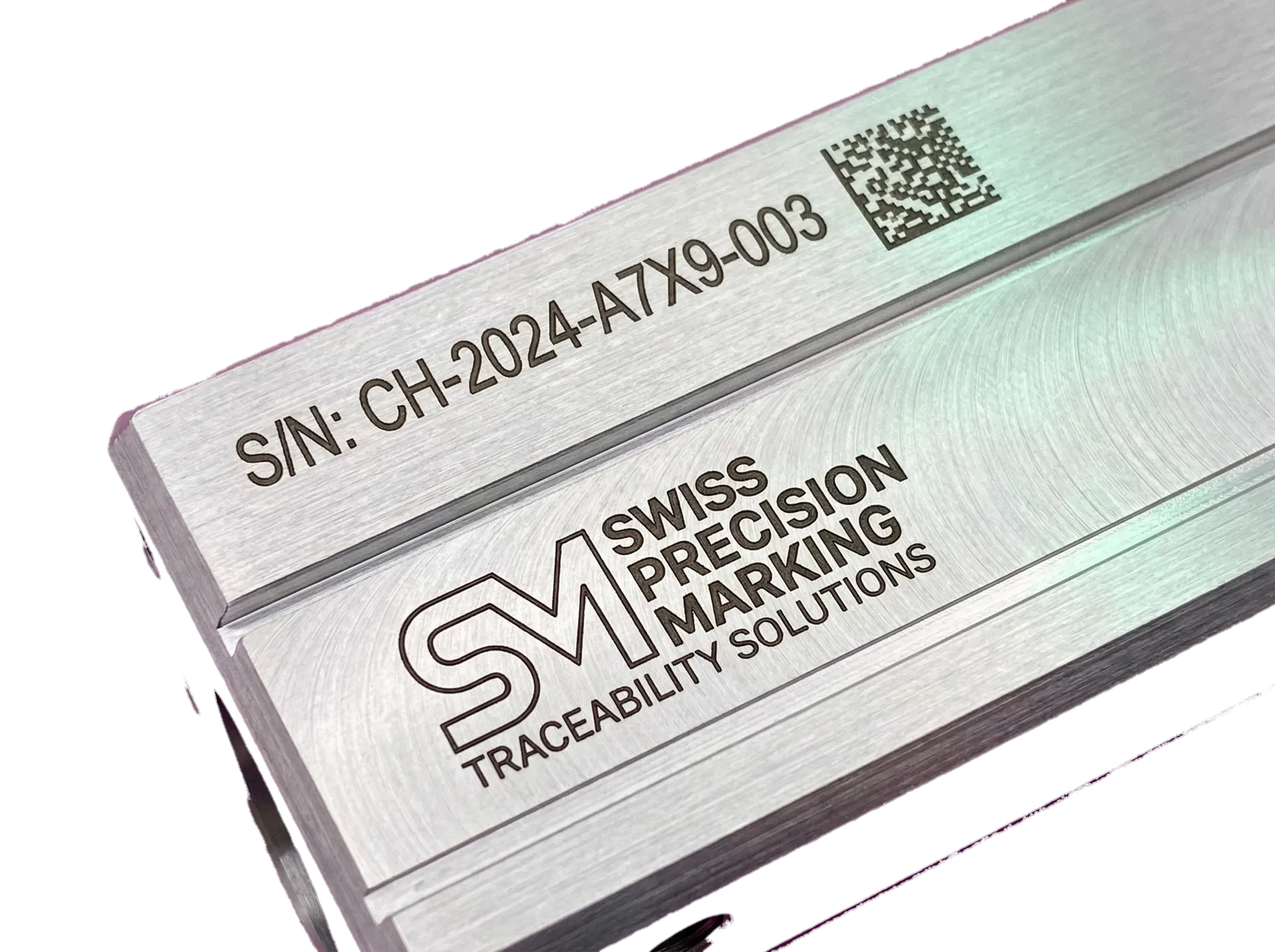
Engravings with clear impact are the focus. Text, orientation and surface finishing on acrylic, wood and suitable plastics can be precisely executed.
Laser engraving is suitable for labels, logos, scales, wayfinding systems, panels and finished visual parts. Depending on the material, well-readable information, a premium surface quality or reproducible brand presence are the focus.
Visibility
For panels, signs, branding elements and wayfinding systems, it is decisive that engravings appear precise and visually consistent.
Material quality
Depending on the material, the engraving can functionally inform or deliberately create a premium surface quality.
Repeatability
Especially with recurring engraving orders, calm, reproducible execution is decisive for brand and product consistency.
Consultation
Contrast, depth, feel and material behaviour are best assessed when goal and application are defined early.
For spatial orientation, labels and information surfaces when texts and symbols should remain permanently and cleanly readable.
Suitable for scales, designations and function notes on components where precision and visual calm are important.
For logos, design elements and finished surfaces when material quality and detail precision co-define the overall impression.
Material data
These figures come from the same database as our material check. Where something is not possible, it says so here and not only in the quote.
| Material | Cutting | Engraving | Marking | What this means in practice |
|---|---|---|---|---|
| Acrylic GS (cast) | yes | yes | yes | The laser cutting classic: crystal-clear polished cut edges and brilliant deep engraving. Cast acrylic engraves milky-white — ideal for lettering. |
| Acrylic XT (extruded) | yes | conditional | yes | Cuts excellently with smooth edges and is cheaper than GS. However, engravings remain grey-transparent rather than white — first choice for pure cutting jobs. |
| Solid wood (oak, beech, maple …) | conditional | yes | yes | Engravings on solid wood are first class — high-quality, dark burn engraving. Cutting is possible up to approx. 8–10 mm; resin-rich softwoods tend to leave burn marks on the edge. |
| Plywood (birch, poplar) | yes | yes | yes | The standard material for maker and model building. Birch gives light surfaces with fine grain, poplar is lighter and cuts faster. Up to approx. 12 mm. |
| Bamboo | conditional | yes | yes | The classic for engraved cutting boards and kitchen items: high-contrast, durable engraving. Cutting is only worthwhile in thin thicknesses. |
| Cork | yes | yes | yes | Cuts and engraves excellently — coasters, notice boards, packaging inserts. Natural cork and pressed cork are both suitable. |
| Glass | no | yes | yes | Glass is finely frosted by the laser — elegant for glasses, bottles and awards. Cutting is physically not possible. |
| Mirror | no | yes | yes | Engraving is done on the reverse side through the coating — the effect appears in the mirror reflection. One of our specialties. |
| Slate / Stone | no | yes | yes | Slate engraves with high-contrast light markings and is very popular as a serving board or sign. Granite and marble can also be engraved. |
| Leather (vegetable tanned) | yes | yes | yes | Vegetable-tanned leather cuts and engraves excellently — labels, key fobs, personalizations with a premium burn look. |
| Anodised aluminium | no | yes | yes | The anodised layer can be marked with high-contrast light marking — precise and permanent. Perfect for nameplates, control panels and serial numbers. Metal cutting is not possible with the CO2 laser. |
| Painted / coated metals | no | yes | yes | The laser precisely removes the paint or coating layer — the bare metal underneath forms the contrast. Also works on aluminium composite panels (Dibond). |
| Coated wood panels (Melamine, HPL) | conditional | conditional | conditional | Feasibility depends on the coating — for unknown compositions we check the material before processing. Melamine-coated panels can often be engraved well (contrast effect). Send us the material specification, we check suitability for free. |
| Bare metals (Alu, Brass, Copper, Steel) | no | no | no | Bare metals reflect the CO2 wavelength and can neither be cut nor engraved. For metal engravings and cutting, we work with partners or advise you on fibre laser solutions. Alternative: Anodised aluminium or marking via Cermark. |
A CO₂ laser sends focused infrared light (10.6 µm) onto the material. The light is absorbed — the material heats up and vaporises in a controlled way. No tool contact. Depth depends on power, speed and passes.
Acrylic (PMMA), wood, laminate, suitable plastics and coated glass. Metals cannot be engraved with CO₂ laser.
Typical engraving depth 0.1–0.5 mm, depending on power and passes.
Laser engraving removes material and creates a tactile recess (0.1–0.5 mm). Laser marking only modifies the surface without deep removal.
From the first piece. No tooling costs, no minimum quantity.
A simple text engraving often takes less than one minute. Large-area raster engravings can take several minutes.
Vector files: AI, SVG, EPS or PDF. Fonts to paths. Engraving areas as filled shapes. Raster engravings from 300 dpi.
On acrylic: fully UV-resistant and solvent-resistant. On wood: engraved areas should be sealed for outdoor use.
Discuss engraving project
CAESS Laser clarifies with you material, effect and file basis so that engravings are executed precisely, readably and with premium quality.
Related Pages