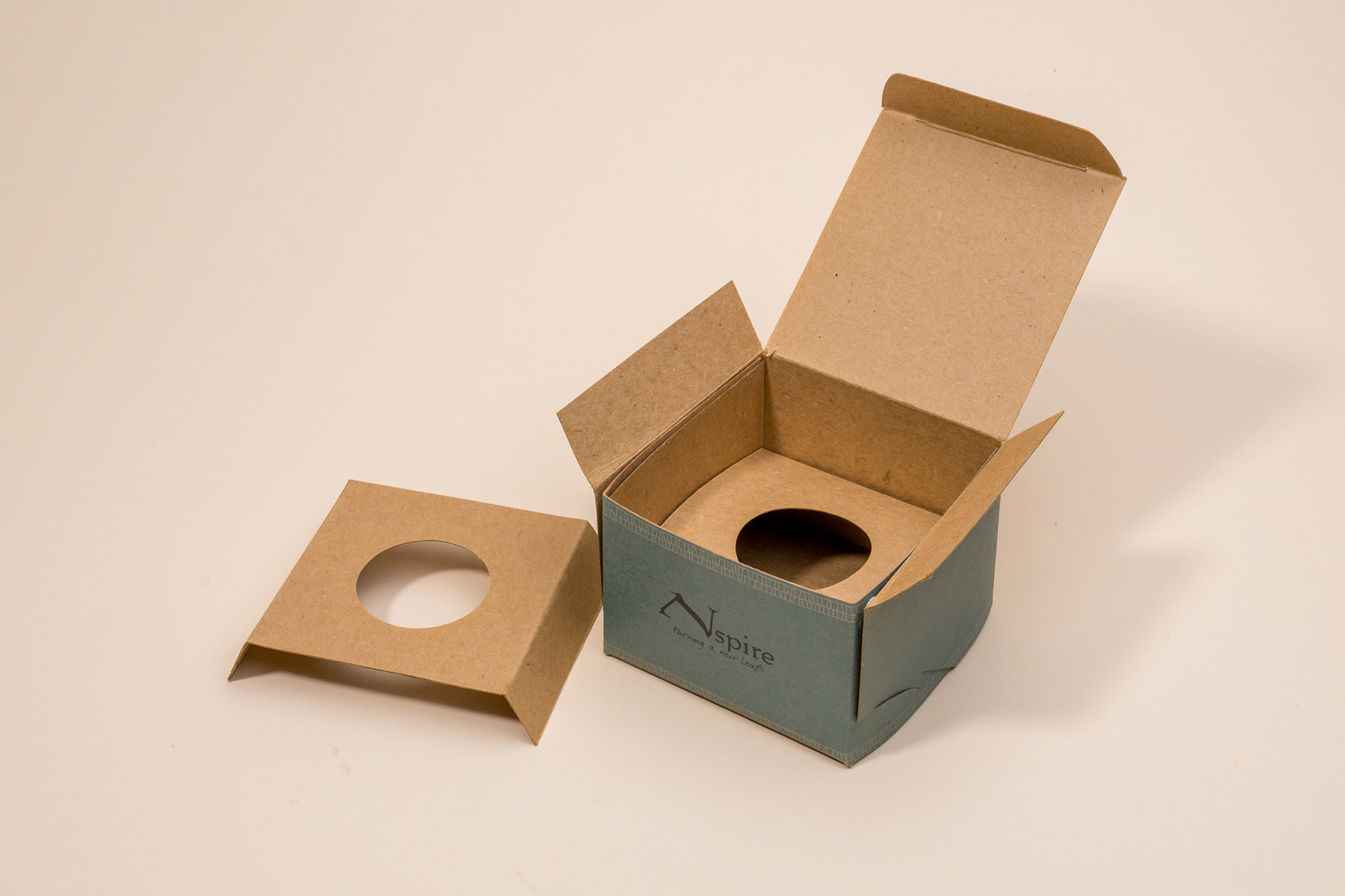
Laser cutting paper and cardboard for packaging prototypes, mock-ups and precise presentation forms.
Paper and cardboard are primarily relevant in the CO2 laser process when development, presentation and sample construction work together. The focus is on packaging prototypes, inlays, presentation models and precise pre-series in the Swiss B2B context.
Why paper and cardboard are particularly strong in sample construction
Paper and cardboard are strongest where ideas need to become tangible. Packaging, inserts or presentation forms can be tested, shown and cleanly coordinated as real samples.
Packaging prototypes
For dummies, folding samples and fast development rounds
Laser-cut cardboard samples help make shape, flaps, cut-outs and handling visible early, before larger quantities or tools are approved.
Folding samples
Sample cartons
Fast development cycles
Inlays
For precisely fitting inserts and safe product presentation
Paper and cardboard inserts are suitable for packaging inserts, product accommodation or structured presentation when parts need to be cleanly positioned.
Packaging inlays
Product accommodation
Precisely fitting cut-outs
Presentation
For mock-ups, presentation models and tangible sales materials
In sales, product development or at client meetings, a real cardboard model can often convince more quickly than a purely digital drawing.
Mock-ups
Client meetings
Early visualisation
Feasibility
Clearly differentiating suitability, stability and purpose
Not every cardboard serves the same goal. For good results, material thickness, surface quality and later stress must be cleanly coordinated.
Material thickness
Folding behaviour
Use as sample or series
Typical applications for paper and cardboard
Packaging prototypes and dummies
For development rounds, approvals and client meetings when shape, folding and handling need to be physically tested before the series.
Inlays and inserts
Suitable for product accommodation and structured presentation when parts need to lie securely and be cleanly positioned in the sample.
Mock-ups and presentation models
Useful for sales, product development and internal coordination when real models convince more quickly than pure drawings.
Technical specifications paper, card and corrugated board
Material thickness 0.05–5 mm (paper, grey board, corrugated board, photo card). Kiss-Cut (partial cut): only the top layer is cut, the carrier remains intact – ideal for folding cartons. Full cut for intricate shapes, display inlays and packaging prototypes. Minimum feature width from approx. 0.3 mm. Kerf width approx. 0.1–0.2 mm. Dimensional tolerance on the finished part: typically ±0.1 mm, ±0.2 mm for large formats and natural materials. The machine (Trotec Speedy 360, 120 W) positions to ±0.015 mm, work area 813 × 508 mm. Addressable accuracy 5 µm.
Material data
Cutting, engraving, marking: what works and what does not
These figures come from the same database as our material check. Where something is not possible, it says so here and not only in the quote.
Material
Cutting
Engraving
Marking
What this means in practice
Cardboard / Corrugated board
yes
conditional
yes
Perfect for packaging prototypes, architectural models and displays. Clean edges without pressure marks — a clear advantage over knife cutting.
Paper
yes
no
conditional
Most filigree cuts for invitations, paper art and laser-cut cards — details impossible with the plotter.
Cork
yes
yes
yes
Cuts and engraves excellently — coasters, notice boards, packaging inserts. Natural cork and pressed cork are both suitable.