HomeMaterialsAcrylic
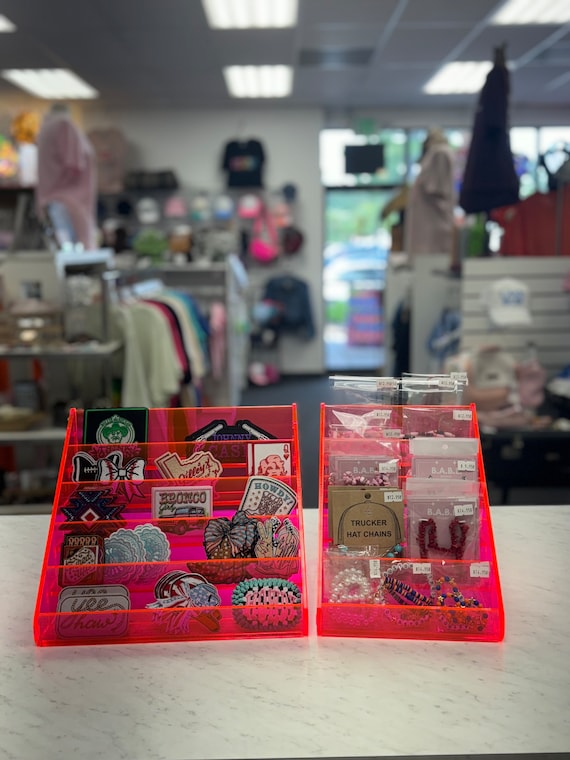
Acrylic display in use as a cleanly laser-cut product stand in a real interior.
Materials · Acrylic

Laser cutting acrylic for displays, signs and precise visual parts in Switzerland.

Acrylic is one of the strongest materials in the current CAESS profile when clean edges, premium aesthetics and clear geometries are required. The focus is on real applications such as displays, stands, signage and finished panels for companies in Switzerland.

Why acrylic is so frequently the first choice in the CO2 laser process

Acrylic convinces wherever material quality remains visible. The material combines precise processability with strong presentation quality and is therefore particularly suitable for displays, visual parts, labels and premium brand applications.

Displays

For sales stands, presentation aids and POS elements with clear contour

Laser-cut acrylic parts look particularly premium in retail, showrooms and at points of sale because transparent surfaces, precise recesses and clean edges are immediately visible.

  • Product stands
  • Counter displays
  • Small series for retail and trade fairs

Signage

For signs, orientation and brand surfaces with clean visual quality

Acrylic is suitable for wayfinding systems, door signs, brand staging and interior labelling when legibility and visual calm are equally important.

  • Door signs
  • Interior signage
  • Laser-cut contours and engravings

Panels

For technical or decorative front parts with precise geometry

Acrylic is also useful for covers, panels and finished visual parts when cut-outs, edge quality and repeatability must be precisely executed.

  • Cut-outs
  • Finished panels
  • Recurring cuts

Advice

Cleanly defining material choice, thickness and appearance in advance

Especially with acrylic, the material type, thickness and desired effect determine the appropriate approach. Clear advance clarification therefore significantly improves the result and quote quality.

  • Material thickness
  • Visible edge quality
  • Early feasibility check

Materialauswahl

Klar, milchig, farbig, mattiert — viele Varianten

Acryl ist in einer grossen Variantenbreite verfügbar. Klares Acryl ist transparent. Milchiges Acryl streut Licht — gut für Hintergrundbeleuchtung. Farbige Platten für Signage. CAESS Laser berät bei der Materialauswahl.

  • Klarglas-Optik (transparent)
  • milchig und satiniert
  • farbige und mattierte Varianten

Wiederholbarkeit

Serien und Nachbestellungen zuverlässig

Für Serienteile werden Daten einmalig eingerichtet. Nachbestellungen laufen schneller und günstiger. Konstante Kantenqualität über alle Lose.

  • Serienteile auf Abruf
  • Nachbestellungen ohne Neueinrichtung
  • gleichmässige Qualität

Typical acrylic applications in everyday projects

Displays and stands

For product presentation, counter, trade fair and POS when transparent surfaces, exact contours and clean visual quality are required.

Signs and wayfinding systems

Suitable for door signs, information surfaces and brand staging when legibility and visual calm are equally important.

Panels and visual parts

Useful for covers, front panels and finished components where cut-outs, edge quality and repeatability must be precisely executed.

Technical specifications acrylic (PMMA)

Cutting thickness 2–20 mm (depending on laser power and lens). Engraving depth 0.05–2 mm continuously adjustable. Cut edge flame-polished, crystal clear, no post-processing required. Minimum feature width from approx. 0.3 mm. Kerf width approx. 0.15–0.3 mm depending on thickness. Dimensional accuracy ±0.015 mm across the 813 × 508 mm work area (Trotec Speedy 360). Addressable accuracy 5 µm. Suitable: cast and extruded PMMA, clear and coloured.

Eignet sich Acryl für Aussenbeschriftungen?

Ja — Acryl (PMMA) ist UV-beständig und witterungsresistent. Es vergilbt nicht unter Sonnenlicht, hält Temperaturschwankungen stand und eignet sich gut für Aussenschilder, Fassadenbeschriftungen und Orientierungselemente im Aussenraum. Lasergravuren auf Acryl sind im Aussenbereich dauerhaft und behalten ihren Kontrast.

Welche Farben und Oberflächen sind bei Acryl verfügbar?

Acryl ist in einer grossen Farbpalette verfügbar: transparent, milchig-weiss, schwarz, verschiedene Farbtöne sowie mattierte und satinierte Oberflächen. Sonderfarben sind über den Lieferanten bestellbar. Bei der Anfrage bitte Farbe und Oberfläche angeben — CAESS Laser prüft die Verfügbarkeit.

Wie dick kann Acryl beim CO₂-Laser geschnitten werden?

Mit dem CAESS CO₂-Laser lässt sich Acryl bis zu ca. 15–20 mm Stärke schneiden. Dickeres Material ist mit mehreren Durchläufen möglich, aber die Schnittqualität kann nachlassen. Für sehr dickes Acryl empfiehlt sich eine Vorabklärung mit einem Mustertest.

Acryl vs. Polycarbonat – was ist besser für Laserschneiden?

Acryl (PMMA) ist deutlich besser für CO₂-Laserschneiden geeignet als Polycarbonat (PC). Polycarbonat neigt beim Schneiden zu Verfärbungen, Schlieren und schlechteren Kanten. Ausserdem kann Polycarbonat beim Laserbearbeiten gesundheitsschädliche Gase freisetzen. Für die meisten Anwendungen ist Acryl die bessere und günstigere Wahl.

Acrylic project

Planning displays, signs or visual parts from acrylic?

If format, material thickness and application context are roughly defined, CAESS Laser can quickly assess feasibility and the appropriate approach.