PMMA
Acrylic for precise visual parts and clean edges
Acrylic is one of the strongest materials for the CO2 laser process when clear contours, good visual quality and premium surfaces are decisive.
- Displays
- Signs
- Finished panels
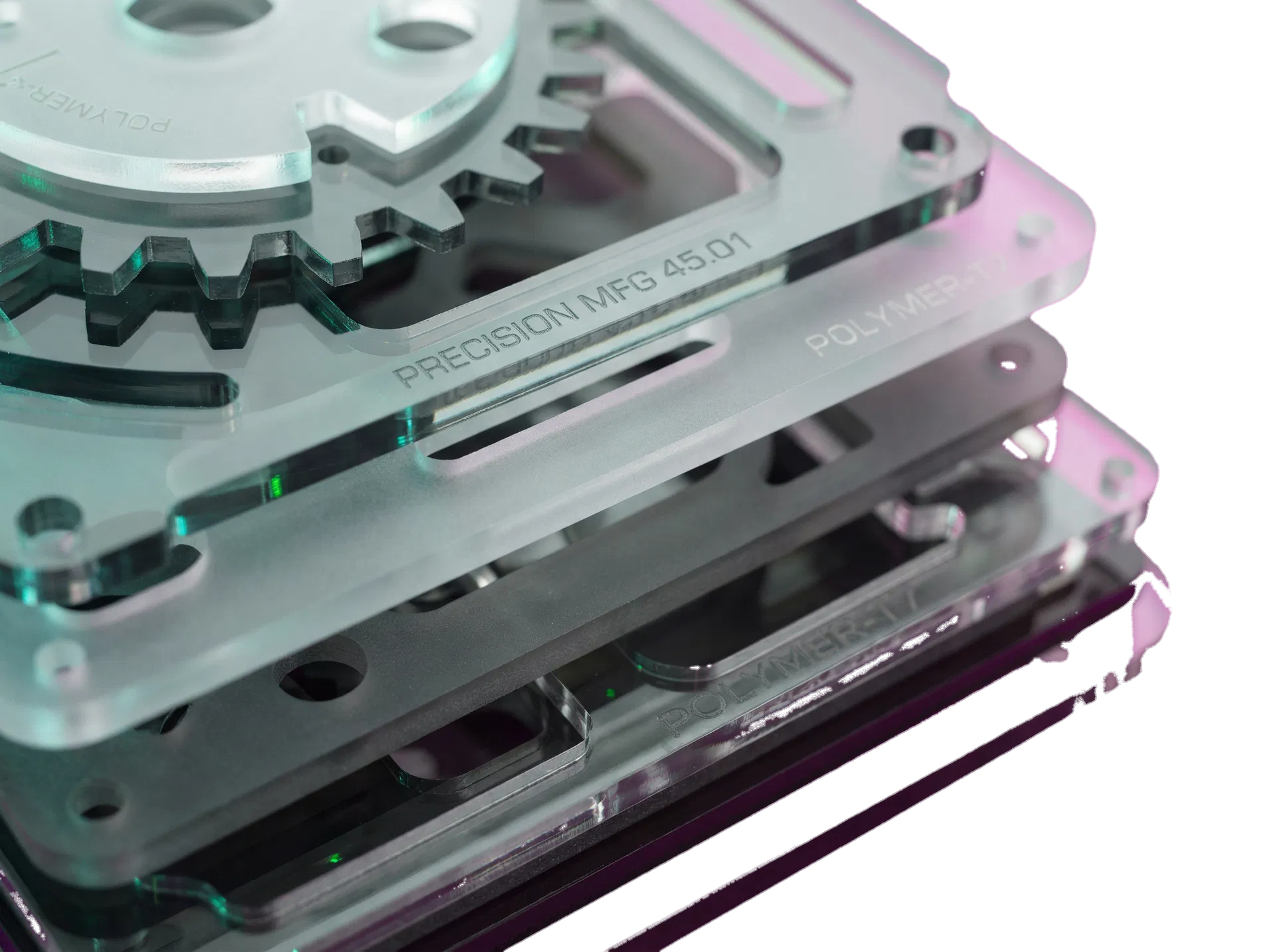
Which materials can be meaningfully laser processed often determines the quality, appearance and economy of the finished component. The focus is on acrylic, wood-based materials and suitable plastics for displays, signs, front panels, labels, sample parts and functional cuts.
The decisive question is not only whether a material can be processed but what it is suitable for in the project. The materials page therefore shows which materials are particularly suitable for clear visual parts, precise labels, functional cuts, sample parts or finished surfaces — and where limitations should be considered early.
PMMA
Acrylic is one of the strongest materials for the CO2 laser process when clear contours, good visual quality and premium surfaces are decisive.
Technical plastics
Suitable plastics can be precisely cut or engraved when data, material type and application are cleanly coordinated.
Wood-based materials
Wood, plywood and related materials are particularly suitable for precise cuts, individual design and premium engraving quality.
Clarity
You receive clarity early about which materials can be meaningfully processed and where alternatives are the better decision for your project.
When transparency, clean edges and premium presentation are important, acrylic is often the first choice for signs, stands and panels.
Suitable for signs, interiors, décor elements and finished surfaces when material character and warm aesthetics are paramount.
Useful for technical cuts, labels and prototypes when material, application and processing are cleanly coordinated.
Material data
These figures come from the same database as our material check. Where something is not possible, it says so here and not only in the quote.
| Material | Cutting | Engraving | Marking | What this means in practice |
|---|---|---|---|---|
| Acrylic GS (cast) | yes | yes | yes | The laser cutting classic: crystal-clear polished cut edges and brilliant deep engraving. Cast acrylic engraves milky-white — ideal for lettering. |
| MDF | yes | yes | yes | Cost-effective, dimensionally stable and precisely cuttable. The cut edge turns dark brown — a popular contrast effect. Heavy smoke is captured by our extraction system. |
| Cardboard / Corrugated board | yes | conditional | yes | Perfect for packaging prototypes, architectural models and displays. Clean edges without pressure marks — a clear advantage over knife cutting. |
| Leather (vegetable tanned) | yes | yes | yes | Vegetable-tanned leather cuts and engraves excellently — labels, key fobs, personalizations with a premium burn look. |
| Anodised aluminium | no | yes | yes | The anodised layer can be marked with high-contrast light marking — precise and permanent. Perfect for nameplates, control panels and serial numbers. Metal cutting is not possible with the CO2 laser. |
| Glass | no | yes | yes | Glass is finely frosted by the laser — elegant for glasses, bottles and awards. Cutting is physically not possible. |
| Craft foam rubber | conditional | no | no | Craft foam rubber may contain PVC — no processing without material proof. EVA-based foam rubber is unproblematic, PVC-based is strictly prohibited. When in doubt we use verified EVA foam. Alternative: EVA foam with data sheet. |
| GRP / Fibreglass | no | no | no | NEVER laser: the epoxy matrix develops toxic fumes, released glass fibres are respirable into the lungs. Also applies to PCB material (FR4). GRP is milled or water-jet cut. Alternative: Milling or water-jet cutting. |
Material test
If material type, thickness or behaviour in the laser process is still open, CAESS Laser can assess feasibility early and structure the next steps.
Related Pages