Contract manufacturing with CO2 laser for outsourced work packages, samples and reliable series runs.
Contract manufacturing is suitable for companies that want to have cuts, engravings or labels produced externally on a recurring basis. Typical cases are outsourced sample parts, small series, defined work packages and project-specific manufacturing steps with clear specifications.
How CAESS Laser can be used as an extended manufacturing partner
Contract manufacturing is suitable for companies that want to have cuts, engravings or labels manufactured externally on a recurring basis. The focus is on cleanly defined work packages, reproducible results and a collaboration that relieves internal development, procurement or production.
Relief
Cleanly outsourcing work packages to a specialised partner
When internal capacities need to be spared or special processing needs to be handled externally, contract manufacturing creates clear operational advantages.
External processing
Capacity relief
Clear responsibility
Series logic
Suitable for recurring orders and defined processes
Contract manufacturing is particularly valuable where the same parts or work steps must be cleanly reproduced.
Recurring parts
Clean documentation
Reliable processes
Communication
Direct line instead of unnecessary complexity
Short paths, traceable consultation and pragmatic coordination characterise working with CAESS Laser.
Short paths
Technical queries
Clean clarification
Application proximity
Sample parts, small series and recurring manufacturing packages
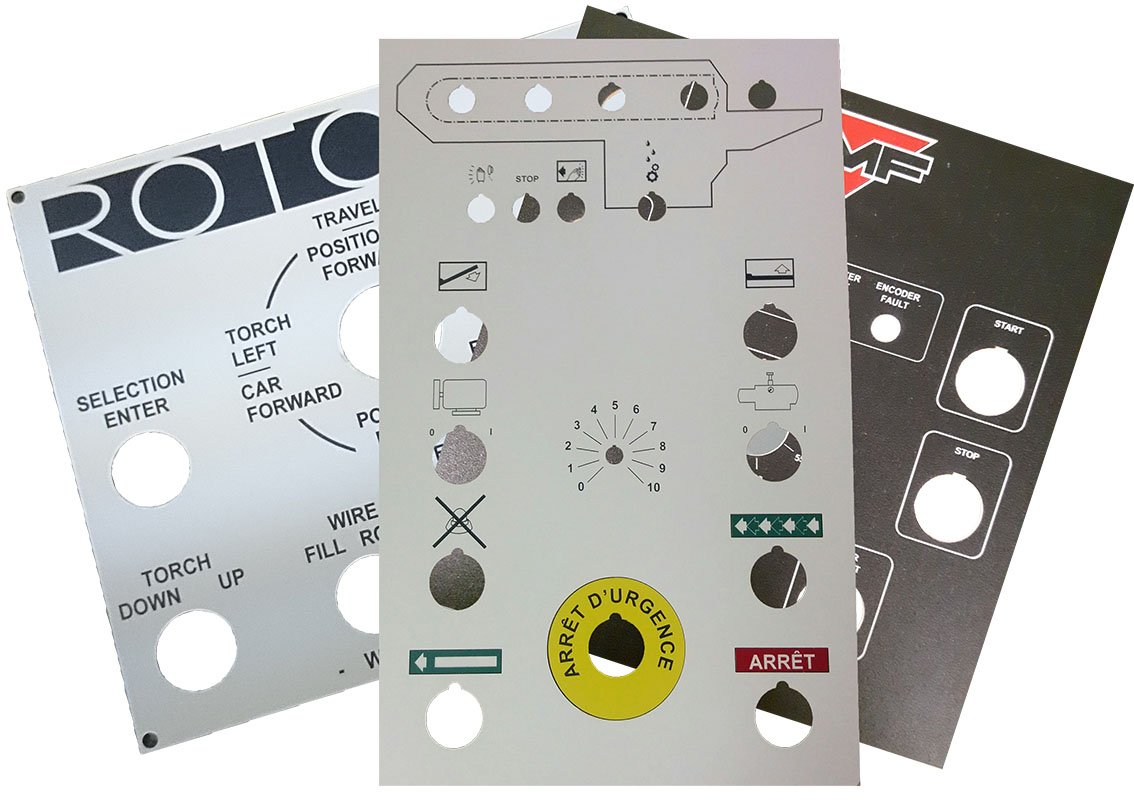
Typical contract manufacturing tasks are series of identical front panels, outsourced engraving packages, regular cuts or project-specific special parts with repeatable execution.
Sample parts
Small series
Regular needs
Typical cases for contract manufacturing
Recurring small series
When the same parts are regularly needed and an external partner should reliably take over the processing step.
Capacity relief
When internal resources need to be spared without sacrificing precise cuts, engravings or labels.
Sample to reorder
When projects start with first samples and then transition into repeatable small series or reorders.
Material data
Cutting, engraving, marking: what works and what does not
These figures come from the same database as our material check. Where something is not possible, it says so here and not only in the quote.
Material
Cutting
Engraving
Marking
What this means in practice
Acrylic GS (cast)
yes
yes
yes
The laser cutting classic: crystal-clear polished cut edges and brilliant deep engraving. Cast acrylic engraves milky-white — ideal for lettering.
MDF
yes
yes
yes
Cost-effective, dimensionally stable and precisely cuttable. The cut edge turns dark brown — a popular contrast effect. Heavy smoke is captured by our extraction system.
Cardboard / Corrugated board
yes
conditional
yes
Perfect for packaging prototypes, architectural models and displays. Clean edges without pressure marks — a clear advantage over knife cutting.
Leather (vegetable tanned)
yes
yes
yes
Vegetable-tanned leather cuts and engraves excellently — labels, key fobs, personalizations with a premium burn look.
Anodised aluminium
no
yes
yes
The anodised layer can be marked with high-contrast light marking — precise and permanent. Perfect for nameplates, control panels and serial numbers. Metal cutting is not possible with the CO2 laser.
Glass
no
yes
yes
Glass is finely frosted by the laser — elegant for glasses, bottles and awards. Cutting is physically not possible.
Craft foam rubber
conditional
no
no
Craft foam rubber may contain PVC — no processing without material proof. EVA-based foam rubber is unproblematic, PVC-based is strictly prohibited. When in doubt we use verified EVA foam. Alternative: EVA foam with data sheet.
GRP / Fibreglass
no
no
no
NEVER laser: the epoxy matrix develops toxic fumes, released glass fibres are respirable into the lungs. Also applies to PCB material (FR4). GRP is milled or water-jet cut. Alternative: Milling or water-jet cutting.